

At Mengsheng Farm in Cangyuan County, located along the southern extension of the Hengduan Mountains in western Yunnan, rows of deep-blue photovoltaic panels gently unfold along rolling tea terraces, shimmering softly under the first clear sunlight of the Yunnan-Guizhou Plateau in 2026. On December 30, 2025, the first 32 megawatts of a tea–solar complementary photovoltaic project invested in and developed by Guohua Energy Investment were successfully connected to the grid. Launched in August 2025, the project is Guohua Energy Investment’s first independently developed photovoltaics-plus-ecological-tea-plantation demonstration project in western Yunnan.

Cangyuan Mengsheng tea–solar complementary project of Guohua Energy Investment
During a tightly scheduled construction period, the project team overcame numerous difficulties and challenges, composing a determined chapter of harmony between modern energy development and ecological agriculture on this green land of western Yunnan. Shortly after construction began in August 2025, Cangyuan entered an unusually intense rainy season. The site turned into a muddy battleground, where every foundation excavation and every concrete pour became a demanding negotiation with nature. In response to persistent rainfall, the project team established a dedicated rainy-season task force and advanced overall progress through refined scheduling.
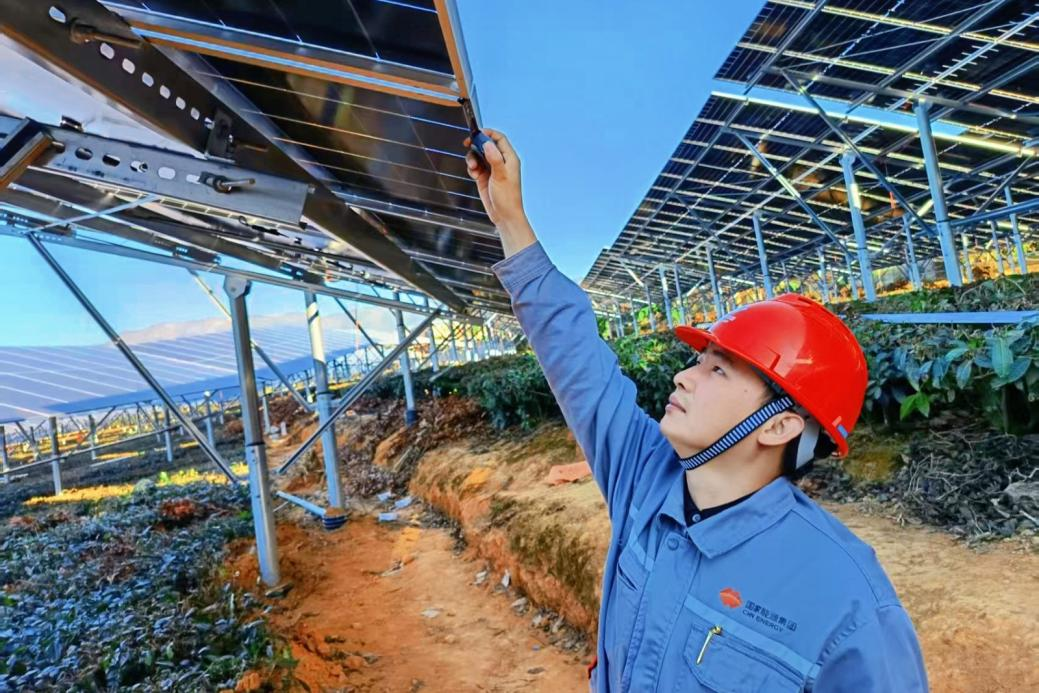
Project staff measuring the spacing between photovoltaic panels
The project’s most distinctive feature lies in its symbiotic model of “power generation above, tea cultivation below” across a 1,000-mu (666,670 m²) core tea plantation. All photovoltaic mounting structures are uniformly set at heights above 2.5 meters, ensuring sufficient sunlight for tea plants as well as adequate space for mechanized farming.
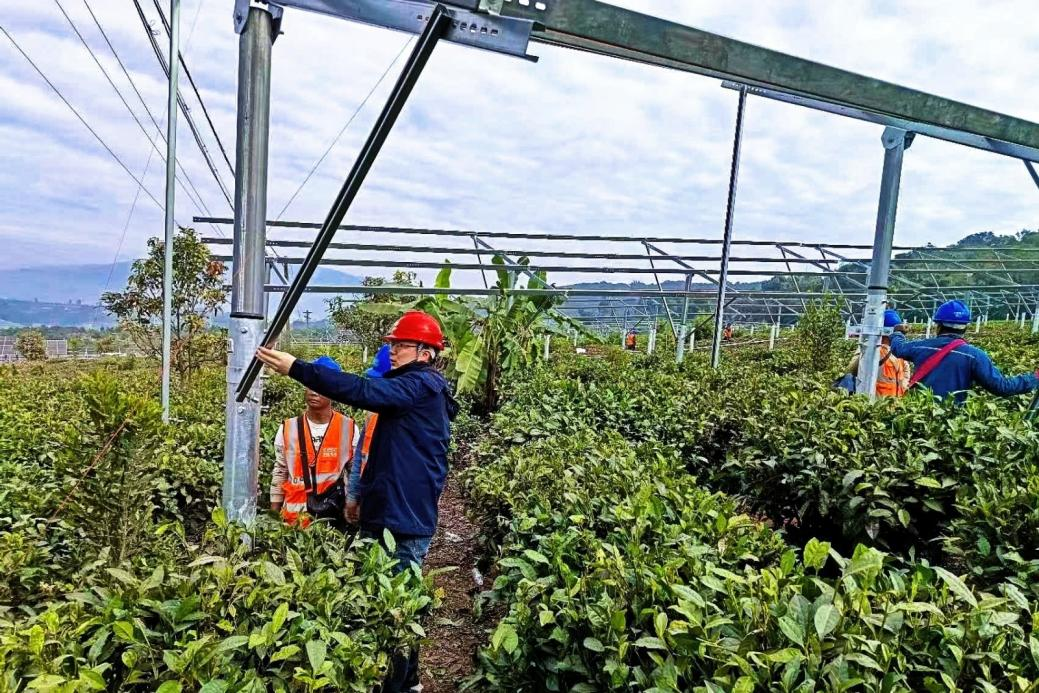
Project staff installing photovoltaic panels
Once fully operational, the project is expected to generate an average of 85 million kilowatt-hours of electricity annually, saving approximately 27,000 tons of standard coal each year and reducing carbon dioxide emissions by about 74,500 tons. Clean electricity will be continuously fed into the local power grid. The integrated photovoltaics-plus-tea-plantation model also creates a positive micro-cycle system: the panels provide moderate shading that helps improve tea quality, while routine tea plantation maintenance offers natural vegetation management and environmental protection for the photovoltaic site.
Economic and social benefits are realized simultaneously. Through land lease payments, direct employment opportunities and skills training, the project has effectively increased local residents’ incomes.
Sheets of blue photovoltaic panels have come together to form a new landscape on this land, illuminating a warmer and more sustainable path toward rural revitalization. Here, each panel silently tells a green story of responsibility, wisdom and hope, and every kilowatt-hour of clean power becomes starlight brightening a happier life in the Wa Mountains.

