

For one family, six years span lives of three generations. For the snowy plateau, they reflect decades of profound change. In Tonglong Village, Nierong County of Nagqu City in the Xizang Autonomous Region, the housing history of Ciren Zhuoga’s family offers a vivid glimpse into how living conditions for local herders have steadily improved.
Ciren Zhuoga was born and raised in Tonglong Village. The area sits at an average elevation of more than 4,700 meters, where winter temperatures often drop below minus 20 degrees Celsius and oxygen levels are only about 60 percent of those on the plains. Locals often describe it as a place “where survival is a challenge.”
She recalls that her grandparents lived a nomadic life, moving with the seasons and without permanent homes. In the earliest years, families stayed in damp earthen pits. Later, they relied on black tents woven from yak hair. “Back then, everything we did was simply about staying alive,” she said.
After the founding of the People’s Republic of China, Ciren Zhuoga’s parents gained land of their own. Using materials available nearby, herders built rammed-earth houses from loess and straw. The homes were dark and humid, without running water or electricity, but families gathered around dung fires for warmth and brewed butter tea together. “It was the first time we truly had a fixed home,” Ciren recalled.
Living conditions improved further after China launched its reform and opening-up policy in 1978. Ciren Zhuoga’s family moved into sturdier stone houses. Walls built from bluestone provided better protection against the plateau’s fierce wind and snow and carried the family’s hopes for a better life. Memories of ten family members sitting together around the hearth remain among her warmest.
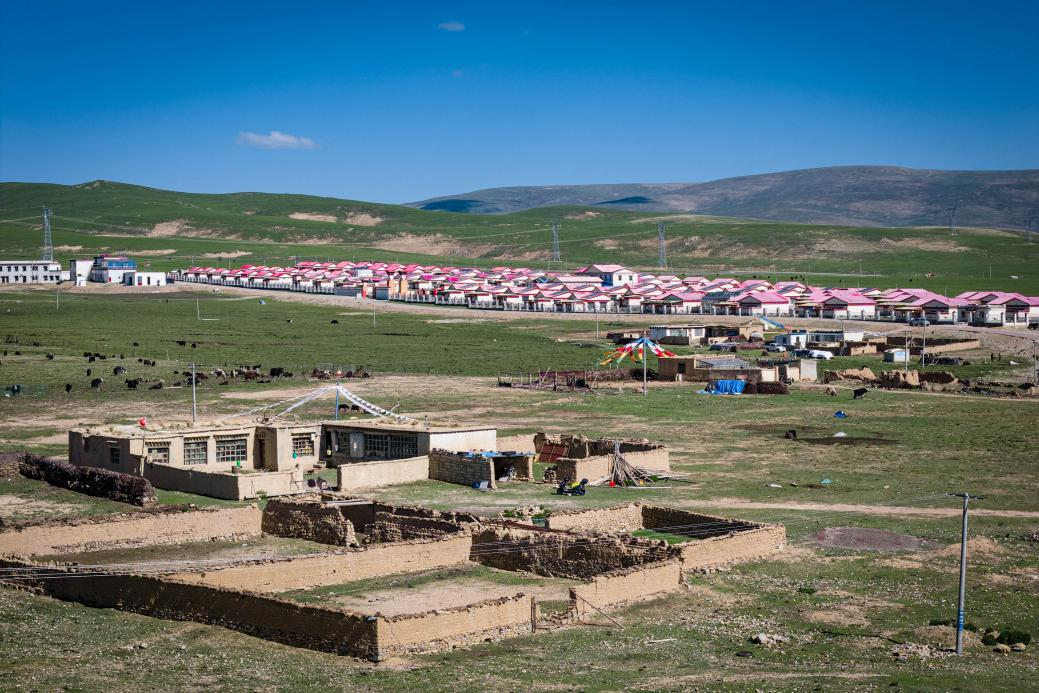
Comparison between the new house and the old stone house
In 2017, as the construction of moderately prosperous villages advanced, CHN Energy launched a national-level New Well-Off Homes program in the area. With an investment of 52.24 million yuan (about $7.3 million), the project build 92 Tibetan-style residential buildings. In 2019, the homes were allocated free of charge to local residents, allowing Ciren Zhuoga’s family to move in with little more than their personal belongings.
“It was something we never dared to imagine,” said her mother-in-law, Lacuo. “Even the best-off families could not have lived in houses like these in the past.”
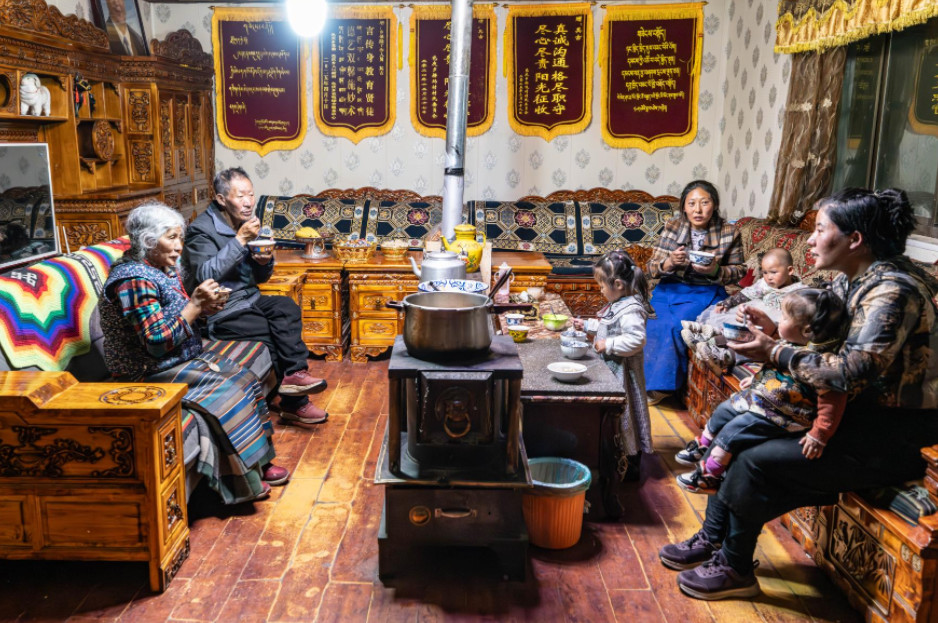
The Zhuoga family enjoying a happy life together
Today, three generations of the family live together in a modern Tibetan-style home. Each family member has a private room. In the kitchen, flames flicker on the stove. On the rooftop, photovoltaic panels quietly absorb sunlight, providing clean energy for their daily life.
For the family, better housing has brought not only improved their living conditions but also a stronger sense of stability and peace of mind. From black tents and earthen houses to stone dwellings and today’s modern Tibetan residence, the homes of three generations tell a small but telling story of Xizang’s economic and social development and improvements in people’s livelihoods over the past six decades.
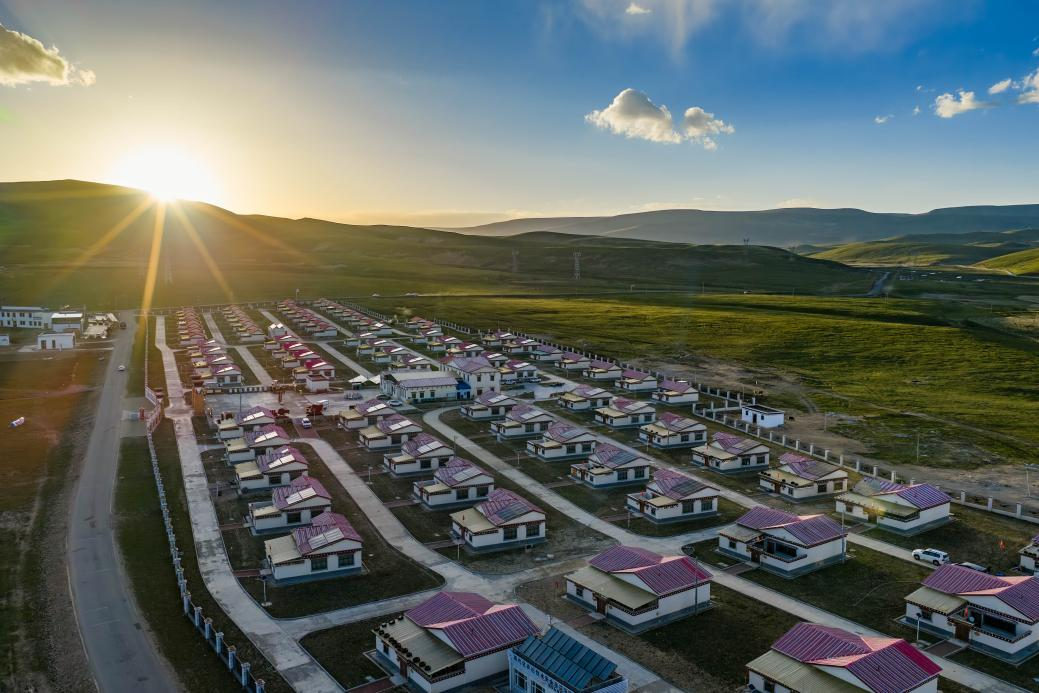
A new look at the well-off village
Sixty years on, houses have changed and lives have changed, but for this family, the story of “home” continues.

