

On the Tala Tidal Flats at dawn, cold winds sweep fine sand across a vast expanse of barren desert where life seems almost absent. In 2021, the first year of the 14th Five-Year Plan period, a preparatory team of just seven or eight members from CHN Energy Qinghai Gonghe Company carried surveying instruments and documents as they repeatedly trekked across this wasteland. Their goal was clear: to build CHN Energy’s own clean energy base in northwest China’s Qinghai province.
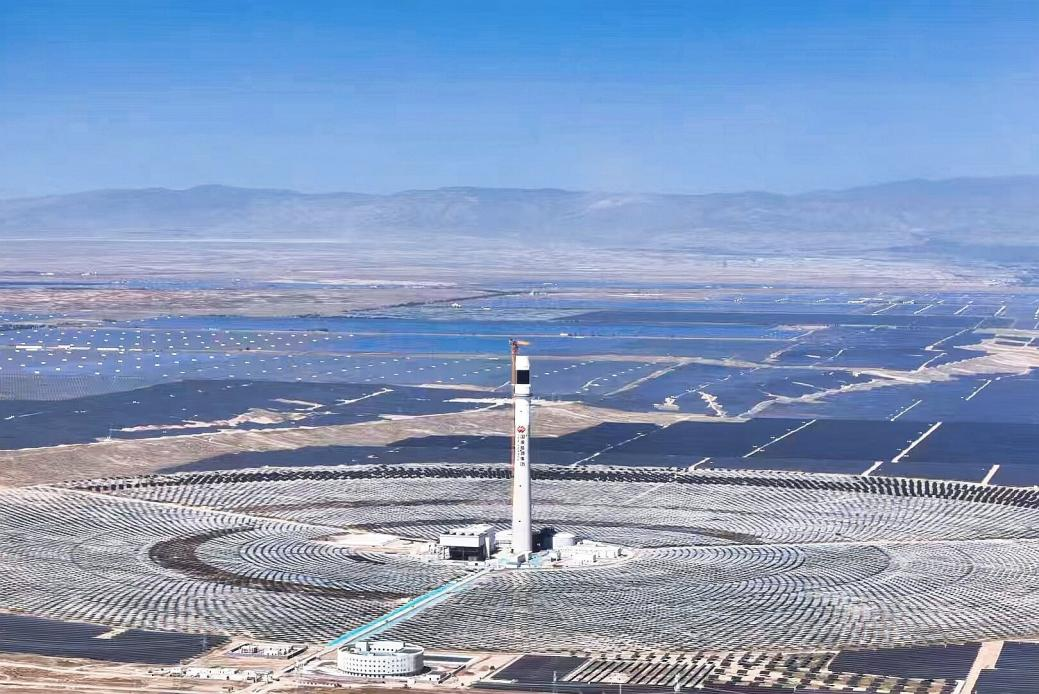
CHN Energy’s first tower-type concentrated solar power project
“At that time, there were only 15 days left before the bidding documents were due,” recalled project leader Jia Jianxin. Days were spent on site measuring wind and solar resources, while nights were devoted to studying policies and calculating technical parameters. Working through consecutive sleepless nights became routine. Driven by determination, this temporary team successfully completed applications for two gigawatt-scale base projects and won the most competitive bidding sections.
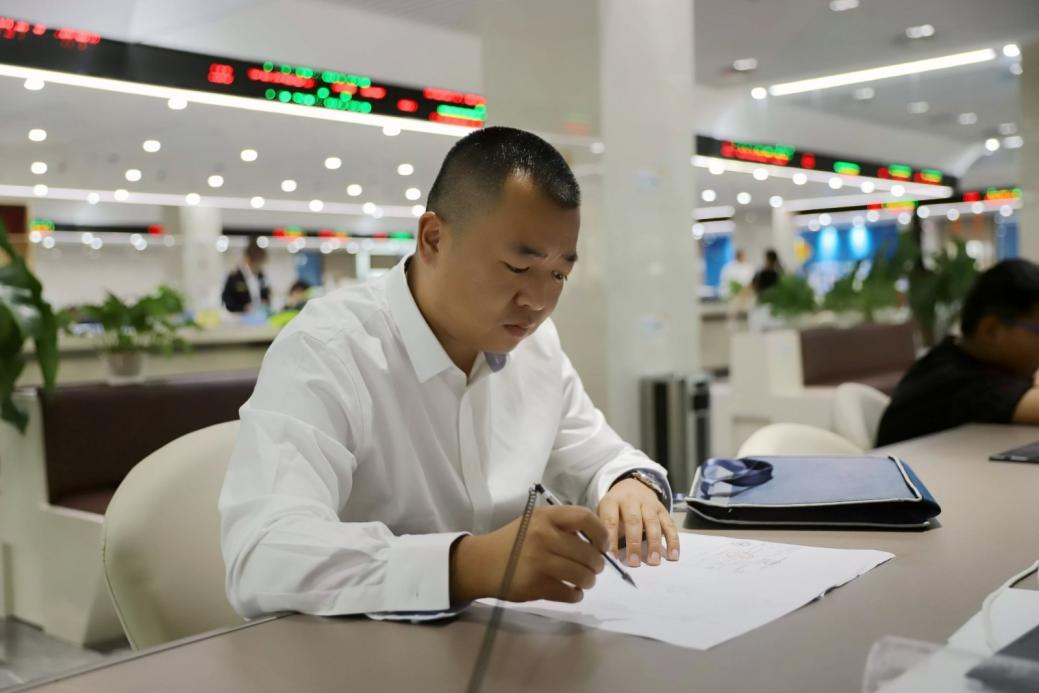
Member of the start-up team handles early-stage project procedures
Breaking through challenges
Winning the bid was only the first hurdle. Under the park’s unified development model, grid connection capacity became the greatest challenge, as the province’s available quota for new energy integration was limited to 1.5 million kilowatts. After repeated consultations and technical demonstrations with local authorities and grid companies, the team secured full-capacity grid connection for the projects.
To reduce system costs and enhance operational reliability, CHN Energy decided to construct its own 330-kilovolt collection substation. Design, construction and commissioning were advanced in parallel. Team members stayed at the design institute for extended periods to refine technical details, saving approximately 300 million yuan (around 43 million USD) in shared costs. As milestones were achieved, the original start-up team of fewer than ten people grew into a professional workforce of 140, with an average age under 30.
By the end of 2025, the company’s installed new energy capacity had surged from zero to 3 million kilowatts, making it a key pillar in CHN Energy’s large-scale clean energy development in Qinghai.

Staff emphasize installation standards to construction workers
Technology integration
On the plateau desert, CHN Energy did not stop at standalone photovoltaic projects but systematically advanced an integrated layout combining solar, wind, thermal power and energy storage.
The Group’s largest electrochemical energy storage project, with a capacity of 255 megawatts for four hours, improved charging and discharging efficiency to over 91 percent after thousands of simulation tests. Its first tower-type concentrated solar power project uses a highly automated control system that calibrates tens of thousands of heliostats every 30 seconds. The application of distributed synchronous condensers, intelligent inspection robots, drones and cleaning robots has significantly enhanced operation and maintenance efficiency and strengthened grid stability.
These efforts provide a comprehensive solution for ensuring the safe and stable operation of renewable energy under high penetration conditions.
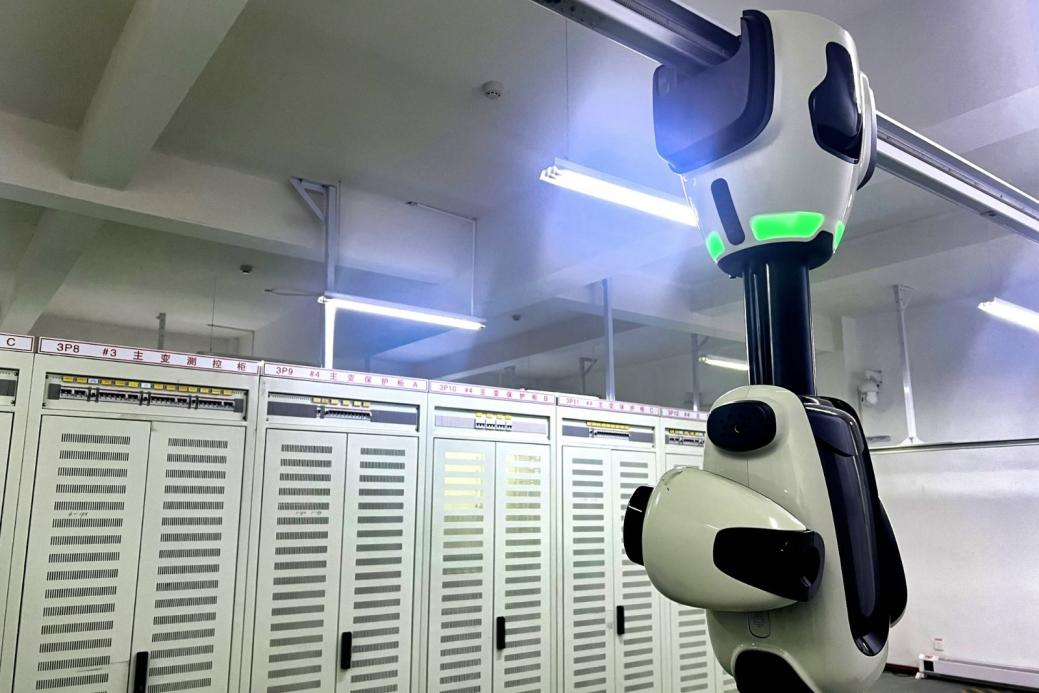
An intelligent inspection robot monitors equipment operation
Ecological coexistence
Energy projects in the desert must also address ecological and livelihood concerns. Beneath the photovoltaic panels, the company has planted cold- and drought-resistant grass species on a large scale, covering more than 30,000 mu (around 20 million square meters) by November 2025. In the Xishan area, an ecological public welfare forest has been established, with 66,000 Qinghai spruce and poplar trees planted.
Local herder Zhaxi often drives his sheep through the project site. He recalls that in the past, “the wind would raise sand at every gust, and even grass roots could not take hold.” Now grass grows beneath the panels and livestock graze between them. His flock has expanded from a few dozen sheep to more than 200. “The solar panels not only generate electricity, they have helped us keep our pasture,” he said.

Sheep graze at the photovoltaic power station
Improving livelihoods
The value of clean energy is also reflected in daily life. CHN Energy invested about 50 million yuan (around 7 million USD) in a clean heating renovation project in Tongde County, replacing coal-fired boilers with electric boilers. On a winter evening, resident Duojie stood outside his home and said with a smile, “The house is warm now, and we no longer need to burn coal. It’s convenient and clean.”
From project construction to ecological restoration, from power supply to livelihood improvement, the energy transition is no longer an abstract concept but a tangible change in local production and daily life.
From initial surveys to grid connection and illumination, from barren desert to a blue ocean of clean energy, the experience of Qinghai Gonghe Company reflects CHN Energy’s broader push toward green and low-carbon transformation. By strengthening project foundations through engineering capabilities, enhancing system resilience through technological innovation, and unlocking long-term value through ecological and social integration, CHN Energy is forging a sustainable development path on the Qinghai Plateau.

