

On the morning of January 24, before the winter fog had lifted in northern Shaanxi, the entrance to Duicha Village in Yindou Town, Mizhi County of northwest China’s Shaanxi province, was already bustling with activity. Several red heavy trucks rolled into the village as residents gathered early at the purchasing site, waiting for the Youth Entrepreneurship Alliance, an e-commerce enterprise, to come and buy their millet. This scene has become a familiar winter routine in recent years. Since CHN Energy began systematic consumption-based assistance in Mizhi County in 2019, local millet farming has gradually shifted to an order-based production model, giving farmers clear expectations for planting and reliable guarantees for sales.
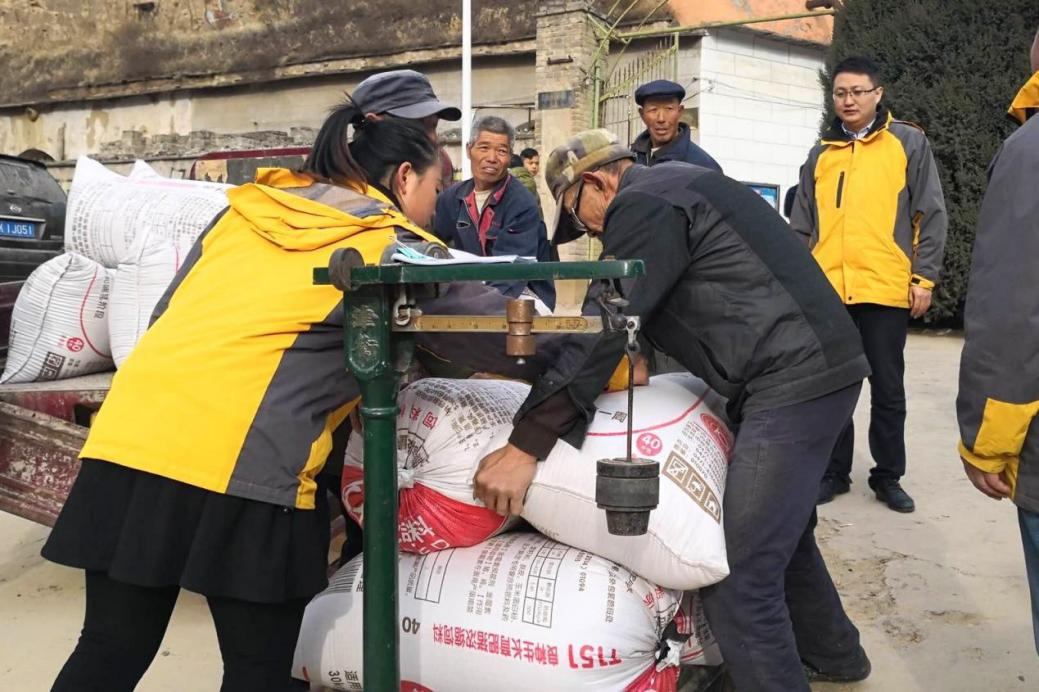
The Youth Entrepreneurship Alliance e-commerce company purchases millet on site
“First we check fullness, then measure moisture, to make sure everything is fair,” said grain buyer Zhang Huaiyi, holding a moisture tester as he worked. Scooping up a handful of millet and examining it carefully, he told villager Zhang Liang, “Your millet is full-grained and dry. We’ll buy it at a price 0.2 yuan (around 0.029 USD) per jin (0.5kg) above the market rate.” Smiling, Zhang Liang lifted his sack onto the scale. “Now we plant according to orders, and we follow standards for watering and fertilizing. The yield and quality are stable. In the past, it was all down to luck, and prices were low. With many children at home, life was hard. Now we can sell at a good price every year, and it gives us peace of mind.”
On the same land, the “sweetness” of orders has also reached the orchards. In Gaoxigou Village, about 20 kilometers away, villagers were busy in fruit grower Gao Naizhu’s storage facility, sorting apples, putting on protective nets, sealing boxes and stacking them neatly. After loading the last box onto a truck, Gao pointed to the orderly stacks of cartons in the yard and said, “All of these are going to CHN Energy. Over the year, this brings in a steady income of about 50,000 yuan (around 7,190 USD).”
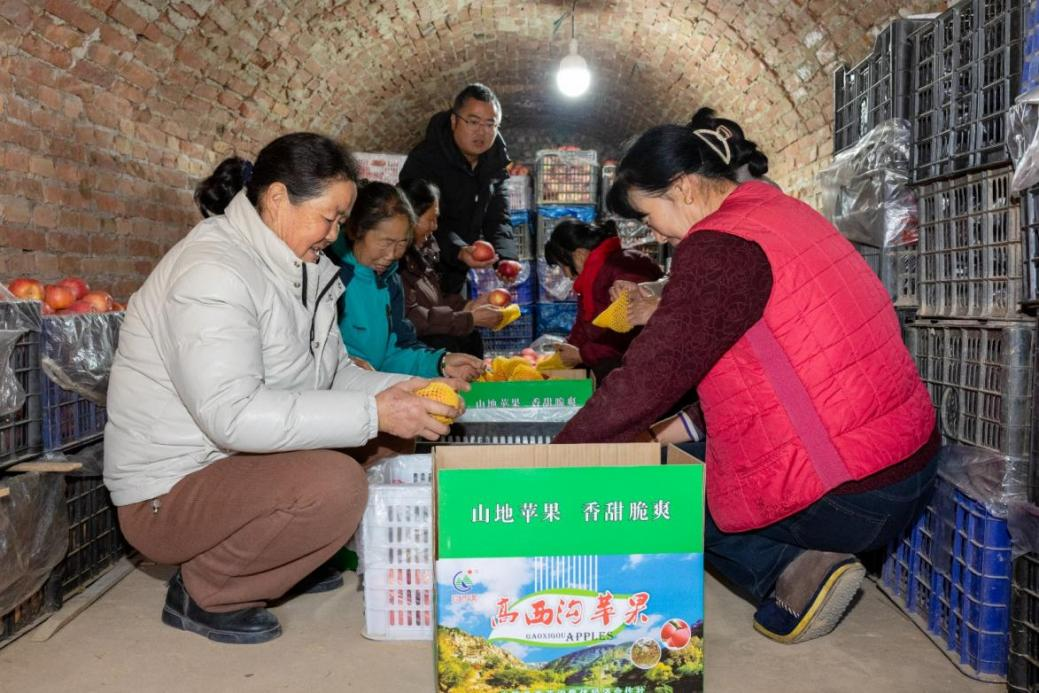
Villagers skillfully sort, box, package, and stack apples in Gao Naizhu’s fruit storage facility
In Dangta Village, the experience of fruit grower Li Zhihong shows even more clearly what an order can mean. Today he manages more than 260 mu (around 173,334 square meters)of orchards, but nine years ago he struggled with unsold produce. A hailstorm in 2017 nearly wiped out the entire harvest. “I squatted at the edge of the field, swallowing my tears,” he recalled. When the trees bore fruit again in 2020, he worried about where such a large harvest could be sold.
The turning point came through support from CHN Energy. In 2020, the Group made a one-time purchase of 250,000 jin (125,000kg) of apples, paying more than 700,000 yuan (100,359 USD). Li treated this order as a reassurance, installing hail protection nets in his orchards, sticking to organic fertilizers to improve quality, and helping nearby households increase their income. “CHN Energy has paved the road for us,” he said. “Our job is to grow good fruit, shifting from depending on the weather to depending on quality.”
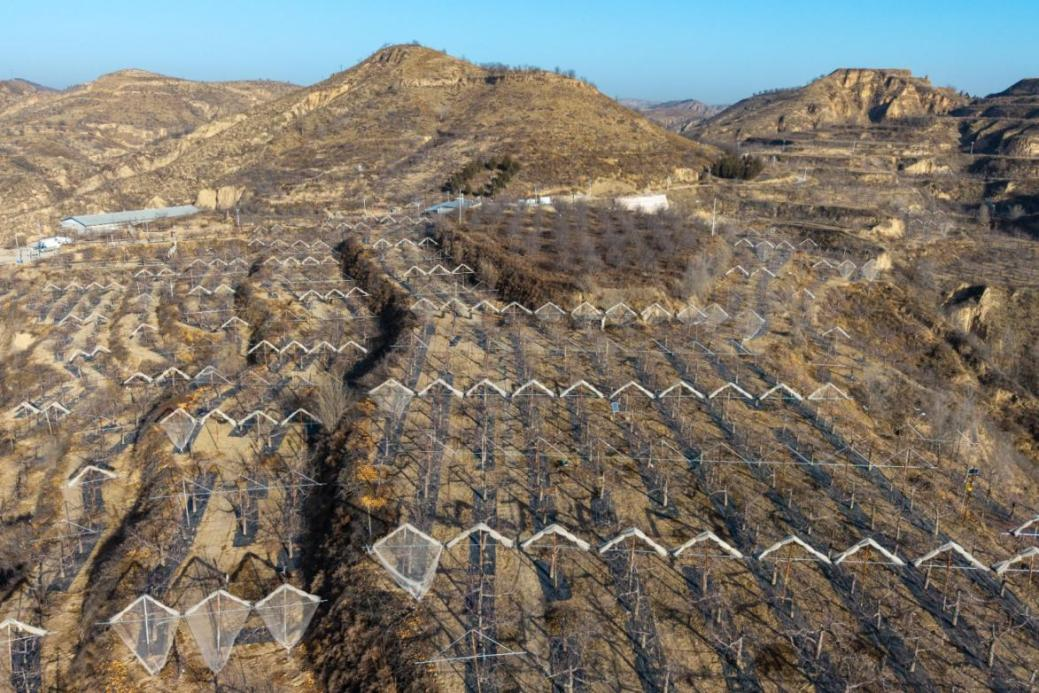
An aerial view of Li Zhihong’s orchards in Dangta Village, Mizhi County.
Behind these changes is a sustainable mechanism for consumption-based assistance. Since 2019, CHN Energy has incorporated specialty products such as Mizhi millet and mountain apples into its procurement system, while integrating platforms including CHN Energy E-Purchase and Huicai Mall. This has enabled agricultural products to move directly from the fields to employee canteens and welfare procurement lists. Zhou Yan, a Group employee, said that every year after receiving millet and apples from her workplace, she sends them to her mother-in-law. “She says the millet is more fragrant than what you buy in supermarkets, and the apples are crisp and sweet. She even recommends them to neighbors through the CHN Energy e-commerce platform.” More and more employees have become promoters of Mizhi agricultural products, sharing and recommending them so that local flavors once known only in northern Shaanxi are reaching more households.
“With stable orders as a foundation, we’re even more motivated,” said Zhang Xiongbiao, head of the Youth Entrepreneurship Alliance. The company is expanding markets through livestreaming and other channels to help Mizhi’s local flavors sell farther and for longer. For villagers, these orders are more than a single purchase. They represent a visible path to higher incomes. From worrying about unsold produce to confidently planting according to orders, behind the spread of local flavors lies growing confidence in a more stable and secure life.

