

Bathed in the morning light of May, the surface of Xiangyang Lake resembles a canvas of shifting light and shadow. Above the water, rows of deep-blue photovoltaic panels eagerly capture every ray of sunlight; below, schools of fish weave among the sturdy foundation piles.
As one of the first key centralized photovoltaic projects included in the 14th Five-Year Plan of Hunan Province in south-central China, the Xiangyang Lake Project developed by CHN Energy Hunan New Energy Company has attracted widespread attention.
At 11:58 a.m. on May 20, the icon of the final inverter on the monitoring screen turned from gray to green. “The full 80-megawatt capacity has been successfully connected to the grid!” The announcement swept through the control room like a gentle breeze across the lake. Built atop fish ponds without disrupting their aquaculture function, the photovoltaic power station officially embarked on a new journey powered by sunlight.
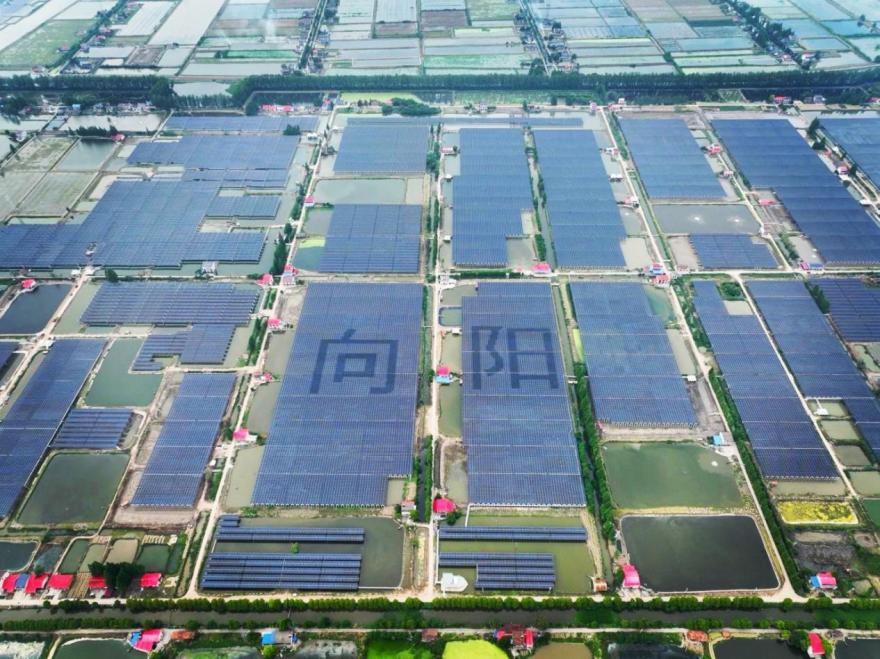
Aerial view of the fishery-solar complementary PV project at Xiangyang Lake
Exploring beneath the water: safeguarding fishermen’s livelihoods
Project Manager Huang Xiaoqing made his way across the muddy construction site. To preserve fishing access points and minimize ecological disturbance, the team installed thousands of foundation piles using a high-pressure jet-expanded anchor cable technique with enlarged-head cage-core anchors. The method requires work to be carried out in drained ponds, yet many ponds had already been stocked with fish fry—the source of local farmers’ annual income. Advancing photovoltaic construction while maintaining fish farming operations proved to be an increasingly demanding challenge.
“Project construction must move forward, but we cannot jeopardize the livelihoods of local fishermen,” said company executive Zhang Dongbin after conducting an on-site inspection. He proposed the idea of cofferdam isolation. Following repeated studies and field discussions, the project team developed a coordinated approach combining precise cofferdam isolation and staggered construction scheduling.
Temporary cofferdams formed earthen barriers separating construction zones from active fish-farming waters. On one side, pile-driving equipment operated steadily; on the other, fishing boats continued their daily feeding routines. To minimize disruption, construction was carried out in rotating sections, with low-noise machinery prioritized and vibration-intensive operations strictly avoiding peak feeding periods in the early morning and evening. At dusk, construction lights and the beams of pond patrol flashlights reflected across the lake, coexisting in harmony.
Sprinting toward grid connection: a race against time
If construction on the water was a struggle against nature, completing the administrative procedures was a marathon of patience.
Power purchase agreements, power sales contracts, automation commissioning, and more than a dozen interconnected procedures meant that any delay could halt overall progress. “During the final month, everyone on the project team was operating under immense pressure,” recalled Yuan Wenjia, Director of the Engineering Construction Department. The team established a dedicated “war room”, where every task on the final sprint checklist was assigned to specific individuals. During daily coordination meetings, completed items were crossed off one by one. The growing number of red marks resembled instrument pointers steadily approaching their destination.
From document approvals to the successful grid connection of the first 70 MW phase on December 30, 2025, the team completed dozens of reports and coordinated with more than ten organizations. Phones grew hot from constant use, documents became worn from repeated handling, and plans were revised late into the night. Whenever unexpected obstacles emerged, key personnel stepped forward to resolve conflicts and find solutions. It was this determination to overcome every challenge that ultimately cleared the “last mile” to the power grid.
Dual returns from one lake: balancing ecology and economics
At the entrance to the lake area stands the Solar-Fish Ark Science Station, a silver-white structure resembling an ark resting quietly in time. The project creatively adopted a dragon-boat racing theme for its transformer station foundations, integrating the streamlined form of traditional dragon boats with modern power facilities and giving the structures a dynamic sense of forward motion.
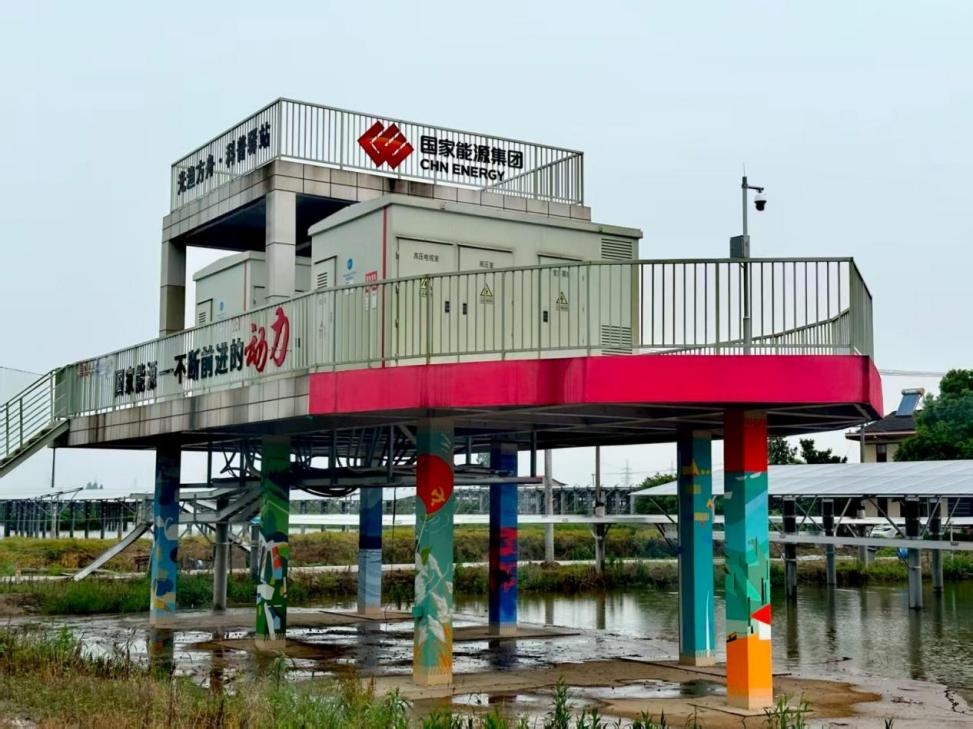
The Solar-Fish Ark Science Station at the Xiangyang Lake photovoltaic project
Even more encouraging are the ecological benefits generated by the project. The photovoltaic panels were installed at the optimal angle for power generation while still allowing sufficient sunlight beneath them for fish growth. Wider spacing between foundation piles also provides access for feeding boats. Measurements taken on summer afternoons show that water temperatures within the photovoltaic area are 2 to 3 degrees Celsius lower than in open-water areas, while dissolved oxygen levels are actually higher. Local fish farmer Zhou lifted a bighead carp from the water and smiled. “In the past, we worried about fish kills during hot weather. Now these panels act like sunshades. The water stays cooler and oxygen levels remain high. The fish are healthier than in previous years, and fish diseases have actually declined.”
The economic results are equally impressive. The project’s internal rate of return has met expectations, while extensive local hiring during construction has injected a new green industrial engine into the Yuan River. The power station supplies more than 100 million kilowatt-hours of green electricity annually, saving approximately 35,300 tons of standard coal each year. The shading effect of the solar panels also reduces water evaporation and suppresses algae growth, gradually improving water clarity across the lake.
As the sun sets, golden light washes across the photovoltaic array. Ma Dong, Deputy General Manager of Hunan New Energy Company, gazes across the lake from the viewing platform. Beneath the panels, fish leap from the water, sending ripples across the surface. “What we are building is not only a power station, but also a new path toward harmony between humanity and nature,” he said. Across the shimmering waters of Xiangyang Lake, clean energy and thriving aquatic life are flourishing together, creating a vibrant picture of sustainable development.

